
Photo spots · Zurich
Zurich in black and white: 12 photo spots beyond the postcard
From the Metropol on Stadthausquai to the Cassiopeiasteg in Wollishofen: the places where our Zurich motifs were taken – and the stories behind them.

Zurich is our largest collection. Most of its motifs are not the well-known postcard views but places you only know once you live here: a lake bath, a railway station, a walkway over the water.
We photograph in black and white only. Without colour, what remains is form, light and structure – and a picture works in any home, whatever colours are already there.
Here are twelve places where our Zurich motifs were taken. For each one you’ll find the matching prints, as a fine art poster, on canvas or on aluminium dibond.
01
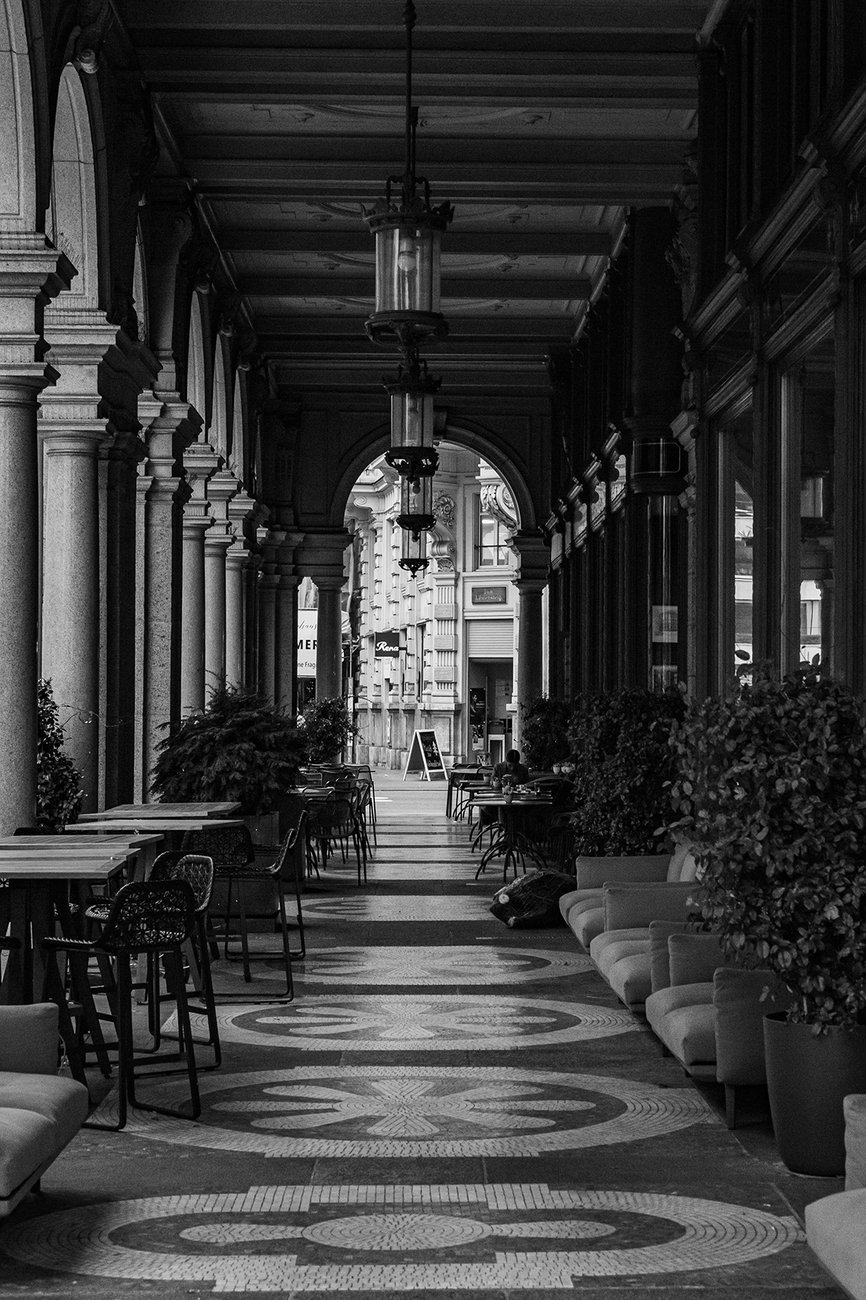
Metropol on Stadthausquai
The Metropol was built between 1892 and 1895 as a pure office and trading building – at the time one of the most modern buildings in the city. Its architect, Heinrich Ernst, built the Rotes Schloss on General-Guisan-Quai in the same years. The name said it all: Zurich wanted to be a metropolis.
In black and white the arcades and the heavy, symmetrical façade stand out clearly. It is still one of our best-selling motifs.

02
Grossmünster
The twin towers of the Grossmünster are Zurich's landmark. It was from here that Huldrych Zwingli drove the Reformation forward from 1519.
We photographed it not only head-on but also from the terrace next to it, looking out over the roofs of the old town.
03
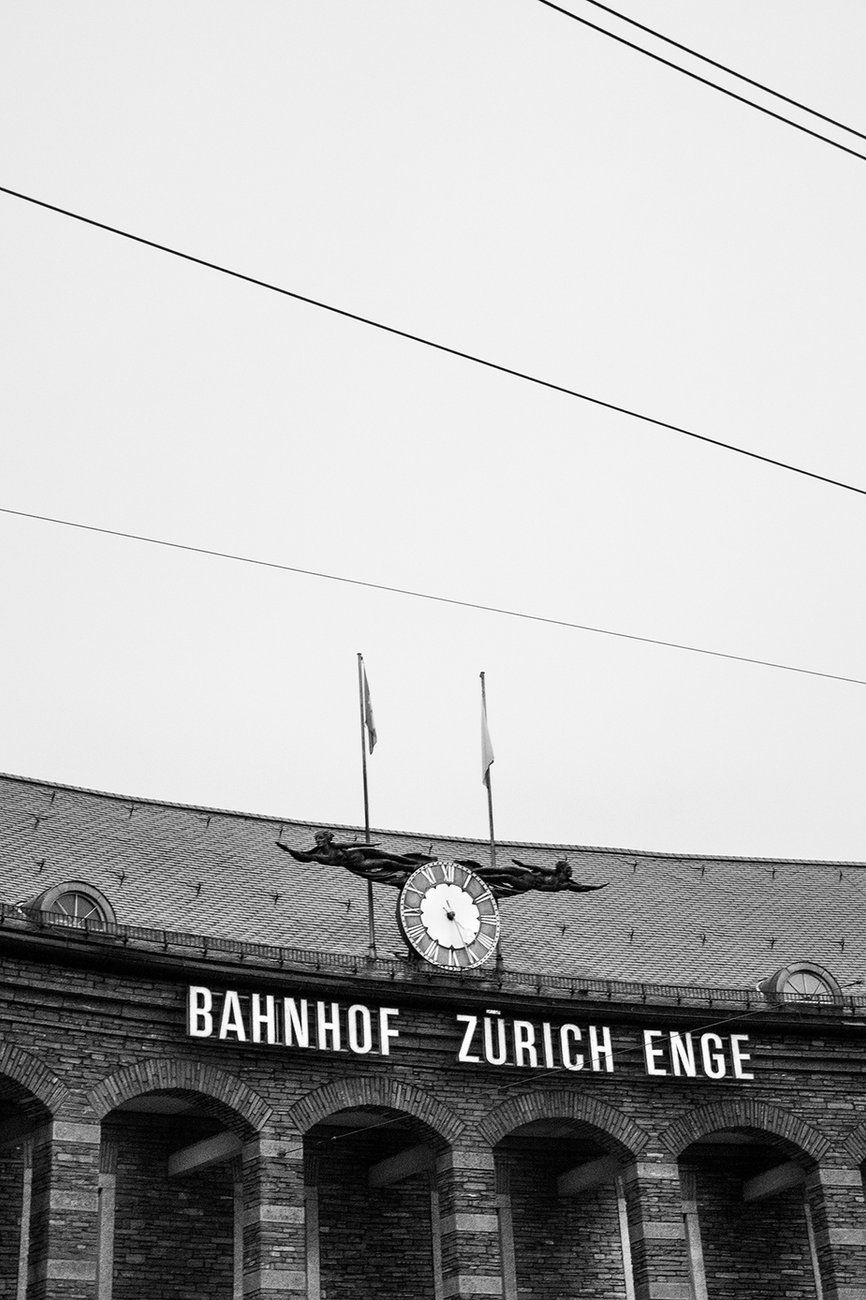
Enge station
Enge station was built from 1925 to 1927 by the brothers Otto and Werner Pfister. Its façade of Ticino granite curves in a row of arcades around the triangular Tessinerplatz.
A building that looks almost austere in black and white – the light and shadow of the arcades make the picture.
04
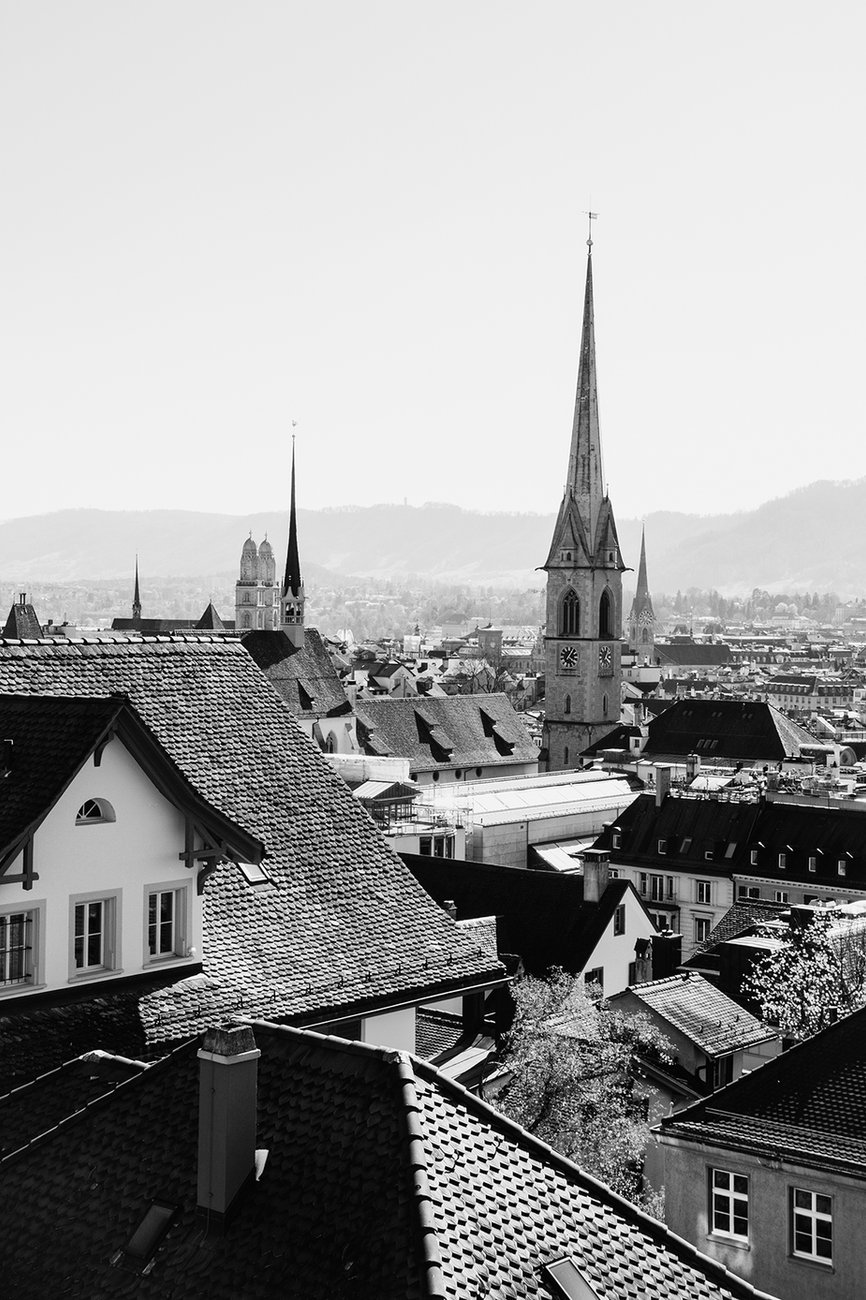
Polyterrasse and ETH
In front of the ETH main building lies the Polyterrasse, one of the best viewpoints over the city. The most stylish way up is the Polybahn funicular from Central.
For anyone who studied in Zurich, this place is more than a view – which is why these motifs often end up on the wall as a graduation gift.
05
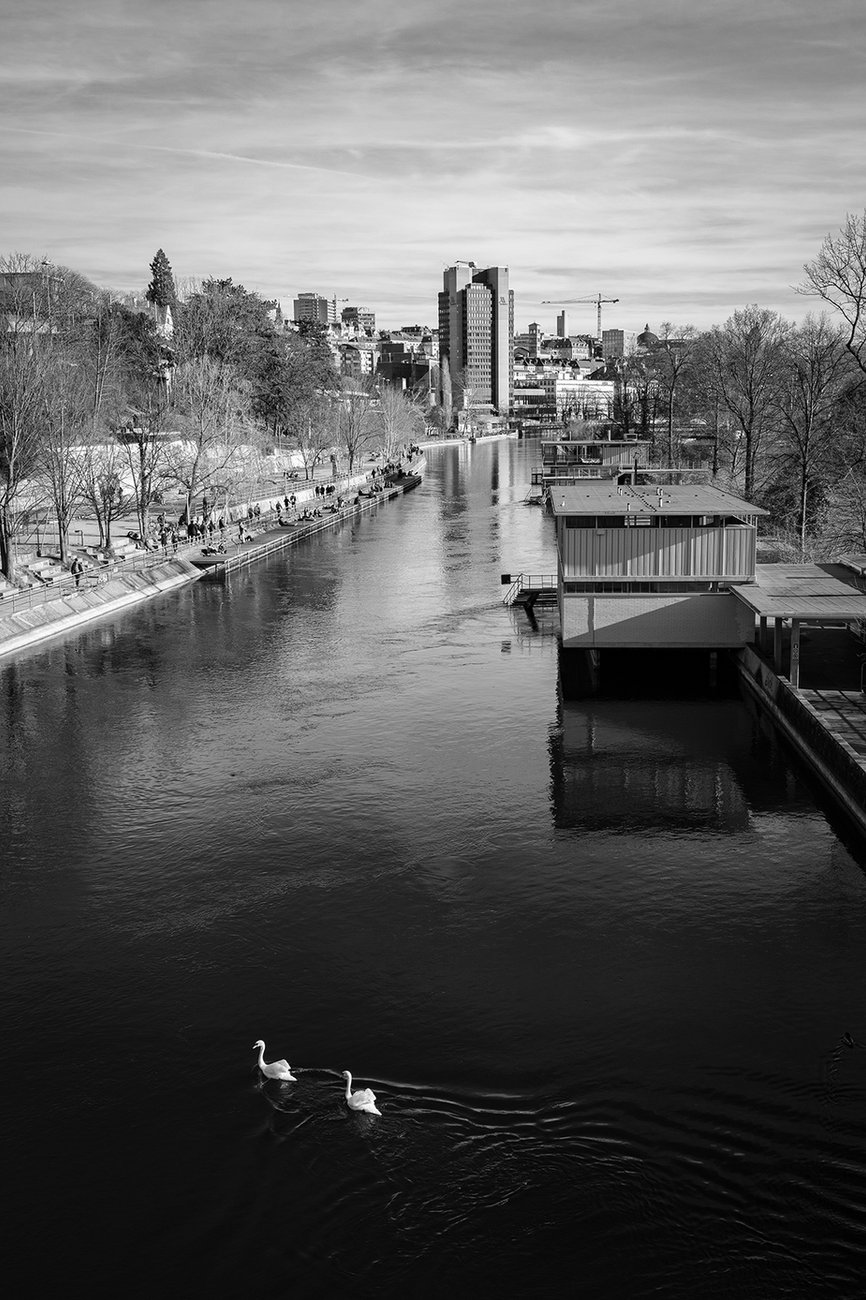
Letten
At Letten the river Limmat meets the old railway viaduct. In summer the Oberer Letten river bath is one of the city's meeting points; in winter the place belongs almost entirely to its architecture.
Our Letten motifs are quiet pictures of a place most people know crowded.

06
Prime Tower and Zurich West
The Prime Tower stands for the new Zurich: where there used to be industry, there are now offices, a university and culture. Close by are the Schiffbau, the former Escher Wyss shipbuilding hall, and the Toni-Areal, a former dairy that now houses the Zurich University of the Arts.
Glass, concrete and chimneys – Zurich West is the city's most graphic district.
07
Cassiopeiasteg and Rote Fabrik
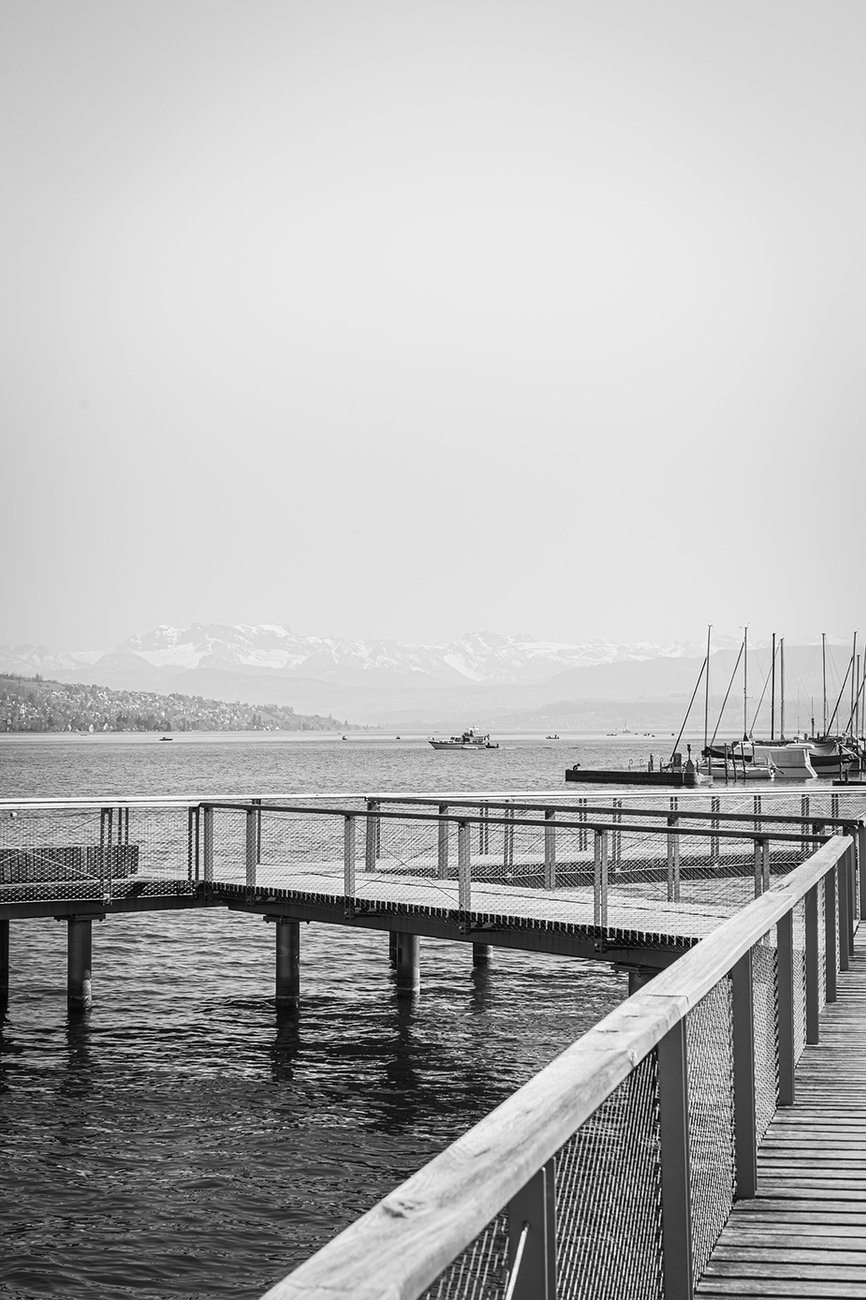
The Cassiopeiasteg is a narrow wooden walkway over the water. It closes the gap in the lakeside path between the Rote Fabrik and Wollishofen harbour – you can now walk almost the entire left shore of the city without a break.
Early in the morning, when the lake is still, it makes one of the most graphic pictures Zurich has to offer. Right next to it: the Rote Fabrik, a former silk mill and today a cultural centre.
08
The lanes of the old town
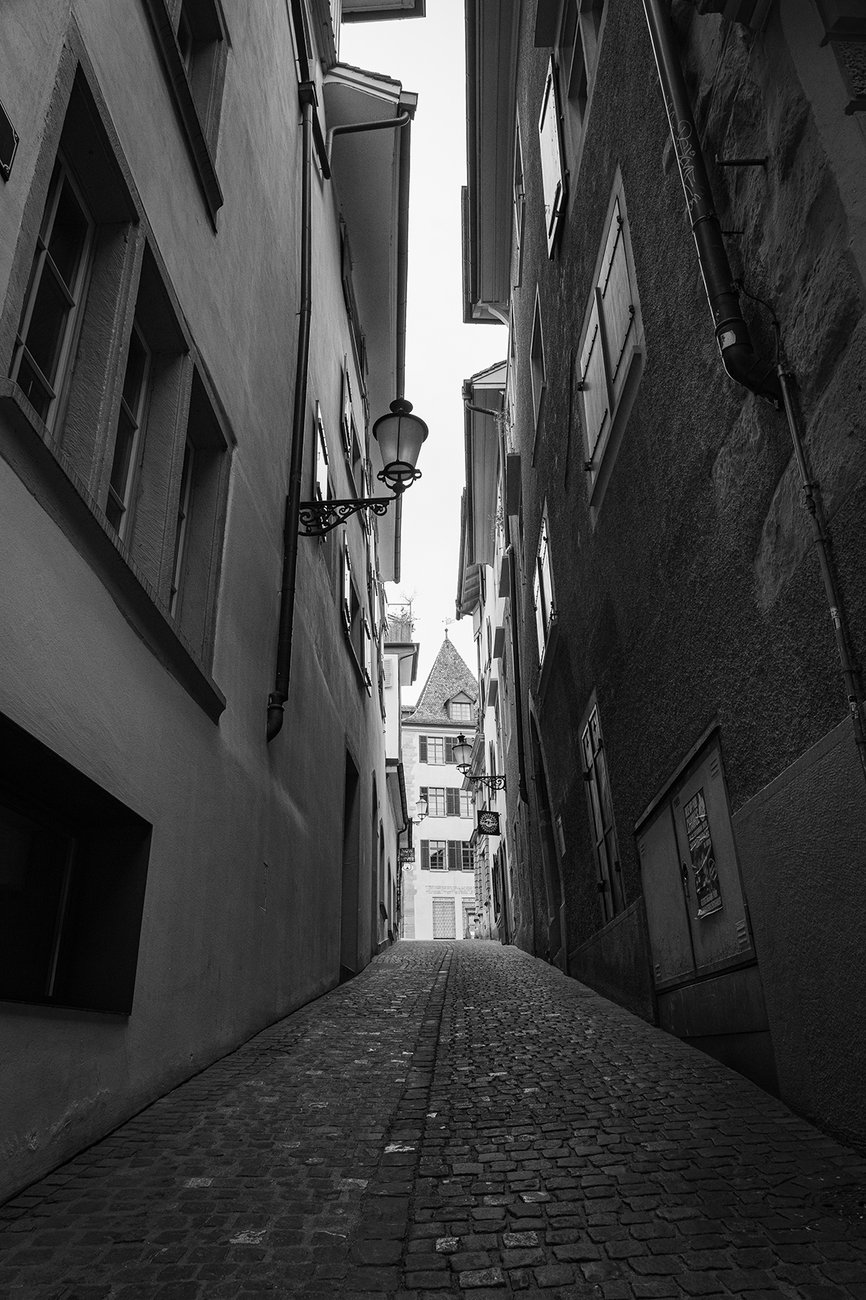
Spiegelgasse, Kirchgasse, Münstergasse, Rindermarkt: in the lanes on the right bank of the Limmat, Zurich is at its smallest and densest. Dada was founded at the Cabaret Voltaire on Spiegelgasse in 1916.
We like to shoot here under an overcast sky – façades and cobblestones then come out evenly.
09
Seebad Enge and Mythenquai
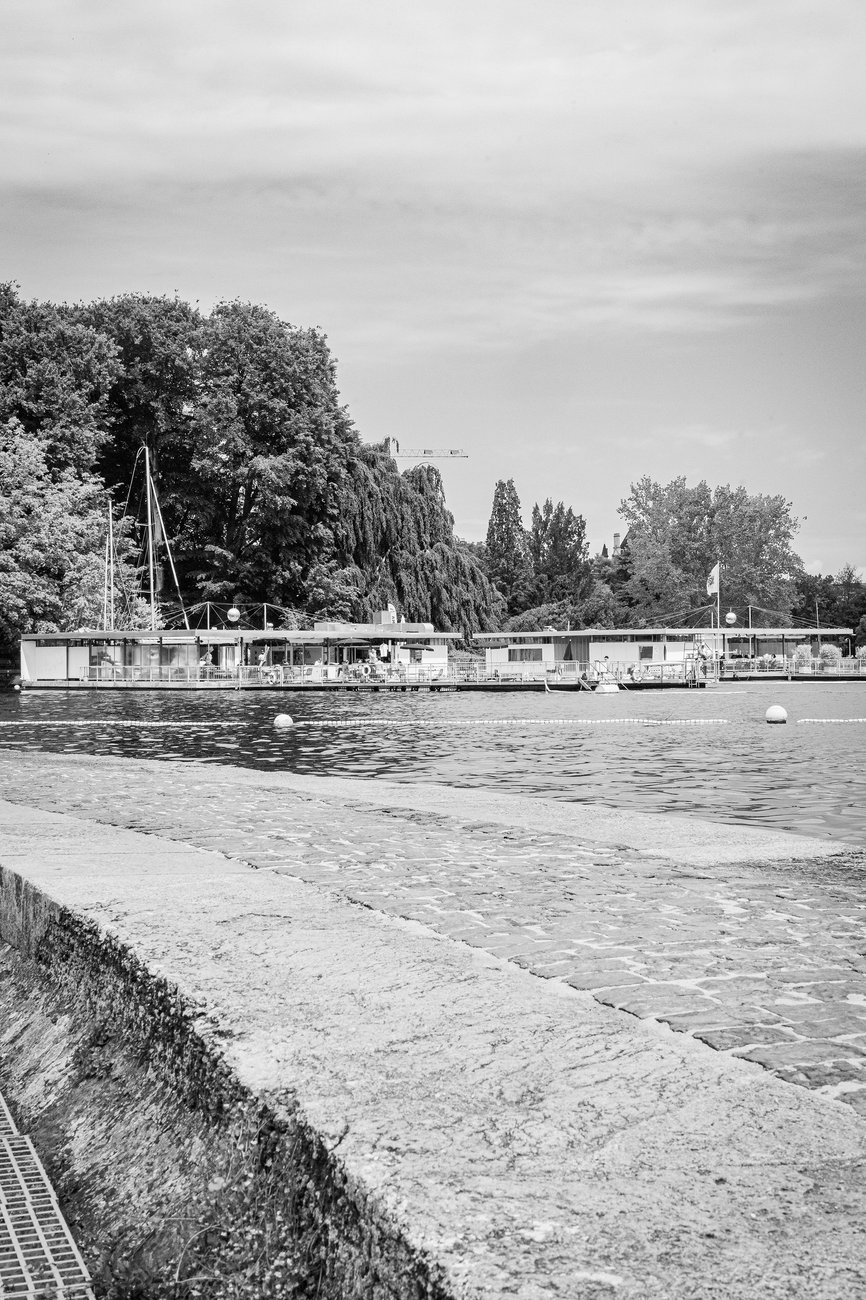
Zurich's lake and river baths are as much part of the city as the lake itself. Seebad Enge is a wooden bath built right into the water; in winter it becomes a sauna. A few steps on is the Mythenquai beach.
Wooden decks, water, horizon – summer places that take on a calm of their own in black and white.
10
Swiss National Museum
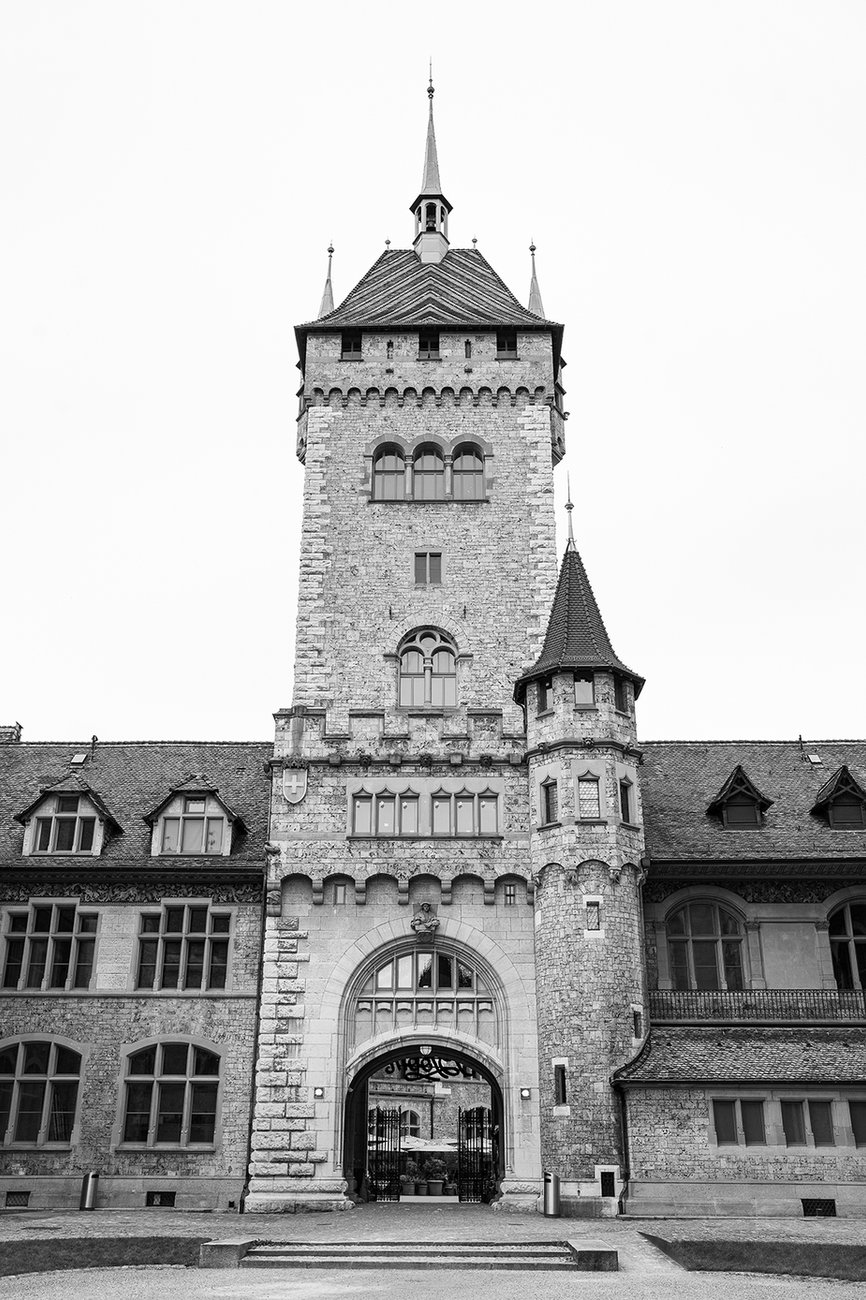
Right behind the main station stands the Landesmuseum, a castle-like building by Gustav Gull from the late 19th century, extended in 2016 by a modern new wing.
Old and new side by side – a motif that works especially well in black and white.
11
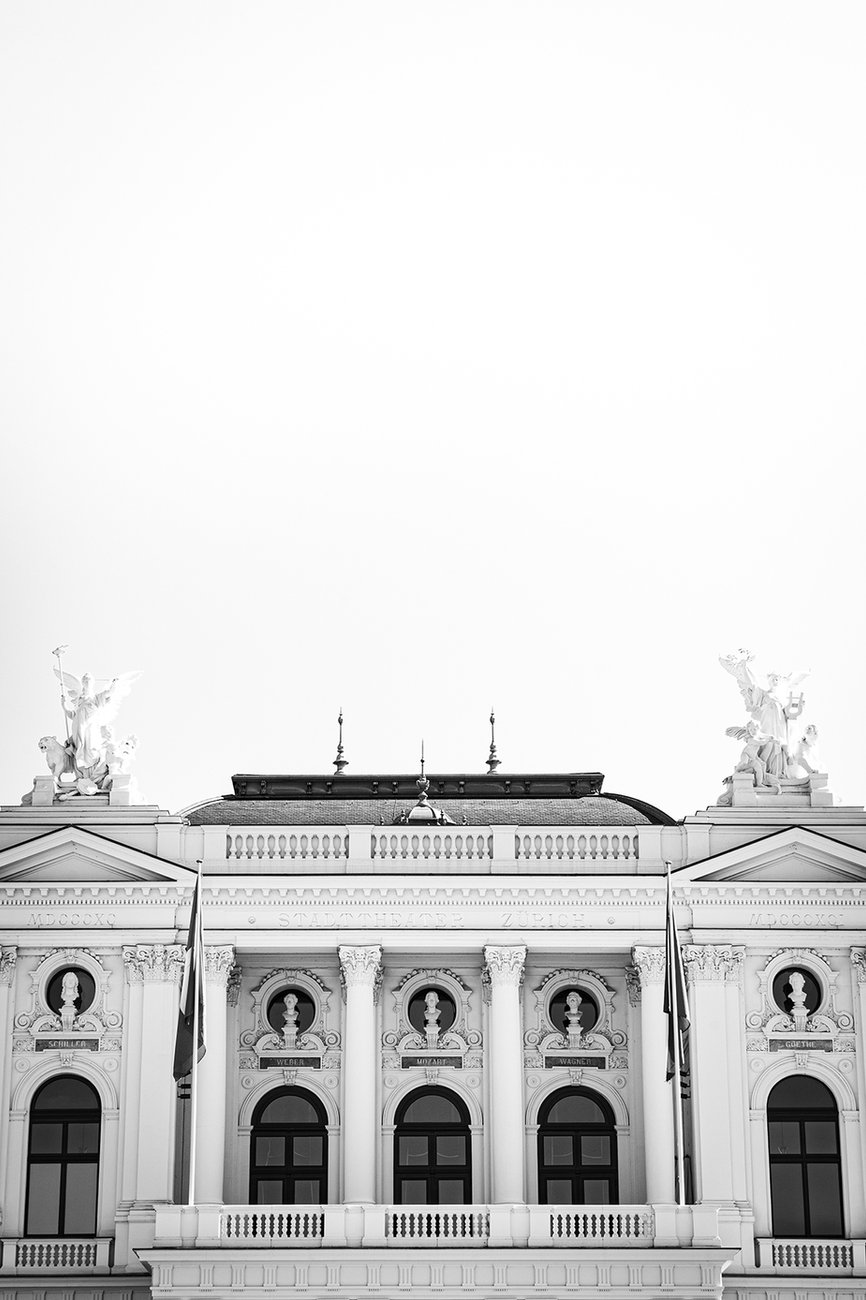
Opera house on Sechseläutenplatz
The opera house shapes Sechseläutenplatz at the lower end of the lake. In the evening, when the square empties and the façade is lit, it almost looks like a stage.
12
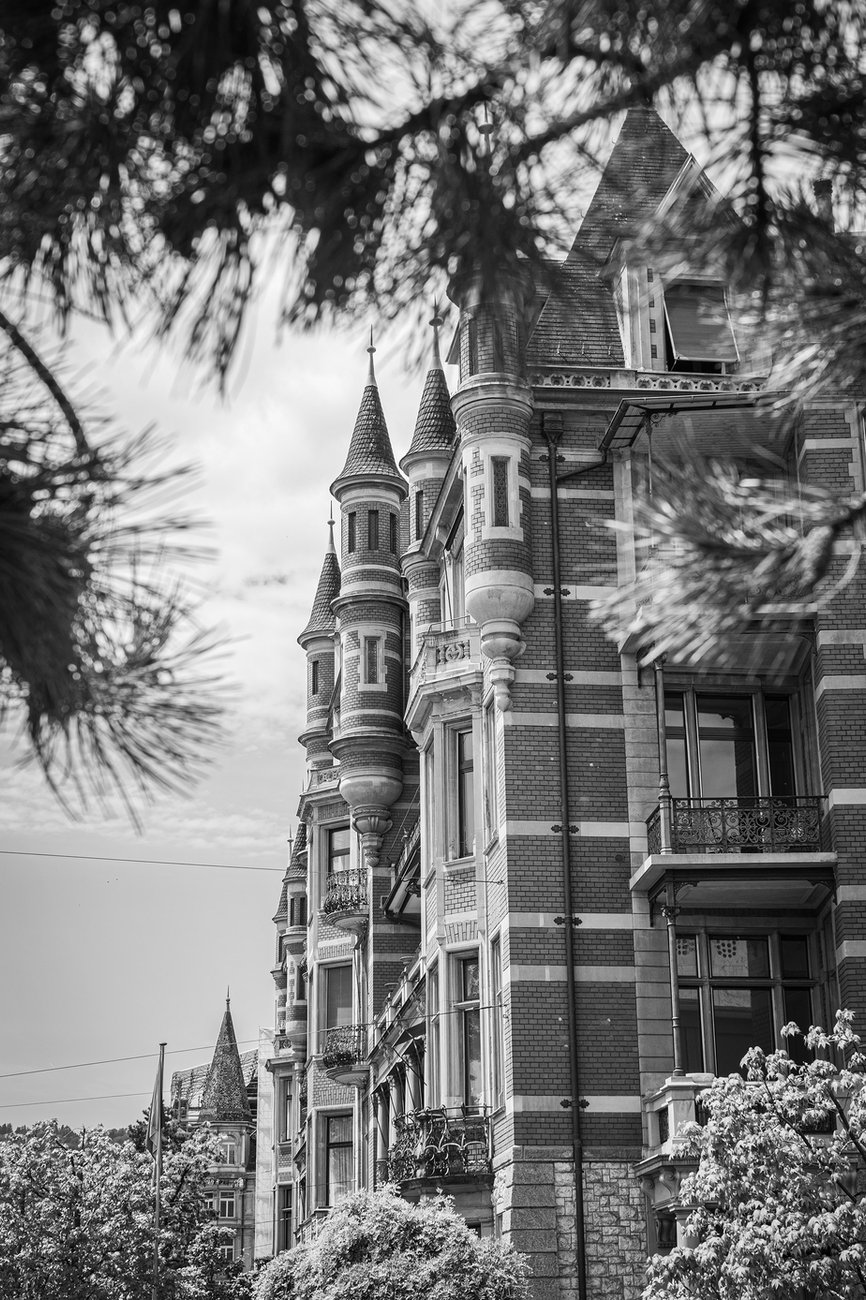
Rotes Schloss
The Rotes Schloss on General-Guisan-Quai is by the same architect as the Metropol: Heinrich Ernst. You can't see its red in black and white – but all the more of its turrets, oriels and ornaments.